

How To Install Gui On Linux Server
Can't find a desktop after you installed Ubuntu Server? That unexpected dark screen got you lot down? Well, you're not the merely one. When I got my beginning VPS, I immediately installed Ubuntu. Only when I saw that dead screen with just a few lines of text, I was sure something had gone wrong with the installation — it didn't look anything similar the Ubuntu I had on my laptop! And so, what's happened and why are we in this mess? And how to install GUI on on Ubuntu Server? That'due south what this postal service is trying to answer.
The first section deals with the why and how, placing the problem in context. The 2nd section helps yous choose the right GUI to install. If you lot're simply hither for the fix, however, feel complimentary to skip correct to instructions on how to install GUI on Ubuntu Server . Just follow the simple, short steps provided in plain English language and you lot'll get things done in no time. And brand sure to stick around to the cease, where I'll reveal a shortcut that can hands cut through all the hassle.
What is Ubuntu Server and Why Does it Affair?
Ubuntu Server is an Ubuntu edition geared for use equally a server operating system. As a Linux distro, Ubuntu is amidst the best favorites for apply on workstations and laptops. The server edition is, if anything, even more popular among server-specific operating systems and that has only increased in recent years. The reason it's so in demand? It's only that good! Permit'due south take a look at some of its best features.
- Piece of cake Container Deployment
- Lightweight Distro
- Perfect Deject Integration
- Incredible Hardware Support
Ubuntu Server delivers all the features in need today and that's probably why you lot chose it too. Then, why does it not include a GUI desktop among all these cool features? The fact is that well-nigh server operating systems are designed to be as lightweight as possible, leaving more resources for the things you want to do with the server. That'southward why most of them just dispense with the GUI in favor of a Command-Line Interface (CLI).
A CLI may work for hardcore server admins and developers but for the residual of united states, it makes things a lot harder. That's why Ubuntu Server lets you install a GUI desktop of your selection with only a few commands. That's also why you are reading this post, and then should we become to it?
If y'all're non sure what your options for a GUI desktop are or which one is better for you, and then the next section should have intendance of that. If y'all have already made a option, skip alee to my guide on how to install GUI on Ubuntu Server ..
How to Choose the All-time Ubuntu GUI?
If yous're more than used to Windows or Mac than Linux, then the thought of choosing between dissimilar desktops may seem strange. Actually, having a selection in the matter makes things more interesting. And then, what are our choices here?
Linux Hosting Simplified
Want a meliorate way to host your websites and spider web apps? Developing something new? Simply don't like Windows? That's why we have Linux VPS.
Get your Linux VPS

Best Ubuntu GUIs:
- GNOME
- KDE Plasma
- MATE
- Xfce
GNOME
GNOME is the most popular GUI desktop for Linux distros. It is besides the default GUI in Ubuntu's workstation edition (the one for personal computers similar your laptop). The fact that it is native to Ubuntu is more than enough to make GNOME a strong candidate for the position of All-time Ubuntu GUI. What else has it going on?
Top GNOME Features:
- Very Stable
- Regular Updates
- Active Customs
- Lots of Apps
In terms of looks, GNOME is non very customizable (hardly customizable would be more accurate) without some complicated workarounds. But it does make up for it with a great design. It may weigh a bit too heavily on RAM and CPU performance, and that may be a problem if your server has limited resources to spare. To sum things up, GNOME is non the default desktop surroundings for nada, with numerous pros to each con.
KDE Plasma
The other staple GUI desktop for Linux distros is KDE Plasma. While not as popular every bit GNOME, it is a mainstream desktop in its own right and information technology has the features to dorsum that up:
Meridian KDE Plasma Features:
- Lightweight
- Easy to Use
- Highly Customizable
- Active Community
KDE Plasma is, without a question, the about customizable Linux desktop e'er. You can change any and all aspects of its advent with just a few clicks. Its blueprint is likewise inspired past Windows, pregnant a similar taskbar and start bill of fare with familiar icon placements. If it has a fewer number of applications, the ones information technology does have on offering are powerful enough to beat whatever ane GNOME app. Perhaps the most important feature to consider when it comes to KDE Plasma as a server Bone, however, is how resources-efficient information technology is. If y'all don't have a lot of resources or need them for more than of import tasks, KDE Plasma is perfect.
All in all, KDE Plasma is a great manner to go on overhead low while getting a more than "normal" experience using Linux, especially if you're used to Windows.
MATE
MATE is an old mitt at providing an eye-communicable but lightweight desktop experience. It'due south even more resource-efficient than KDE Plasma, making it a keen choice equally the GUI for a server Os.
Elevation MATE Features
- Extremely Resource-Efficient
- Intuitive Design
- Time-tested
MATE is actually based on GNOME two, an older version of the almost popular desktop environment. Despite its origins, nonetheless, MATE is very much its own GUI, with a Windows-like blueprint and very fast performance. Some experts even consider it to exist fifty-fifty more lightweight than Xfce, and so if you lot like to keep some beauty to your server Bone but still trim it down as far as it can become, MATE is the way to go.
Xfce
When it comes to lightweight desktop environments, Xfce is usually i of the top three; and it's the virtually resource-efficient GUI desktop on this listing. That light touch, however, comes at the prices of less-mod graphics. Information technology may not exist the best choice for a laptop or workstation, but if you're using a server with limited resource, like a VPS, and y'all don't mind outdated graphics, then Xfce is definitely the best Ubuntu GUI for you. It lets you devote what resource you take to the tasks that actually matter, like handling spider web traffic or running your web app.
How to Install GUI on Ubuntu Server
With no further introductions, hither'south how to install GUI on Ubuntu Server. First of all, I'yard assuming you have full root access to your server, meaning you accept permission to run sudo or superuser-level commands. If y'all're using a VPS and don't know exactly how to establish a remote connection and go the final running, you should read our tutorial on connecting to a remote Linux server .
Footstep 1: Updating your Repositories
If y'all've used a Linux distro before, y'all know that installing most software packages is done using the CLI to connect to a parcel repository and downloading the files. Before you can download your GUI desktop of choice, however, you demand to make sure your repositories are updated. That ensures you lot get the terminal, most stable version of the GUI y'all desire to install.
To update your repositories, enter the post-obit command:
sudo apt-get update && sudo apt-get upgrade Press <Y> if you're asked whether you want to continue with updating the packages.
This command will check the latest versions of all software packages with the repositories. That may take a couple of minutes depending on your Internet connection and how contempo the Ubuntu Server image yous used in your installation is.
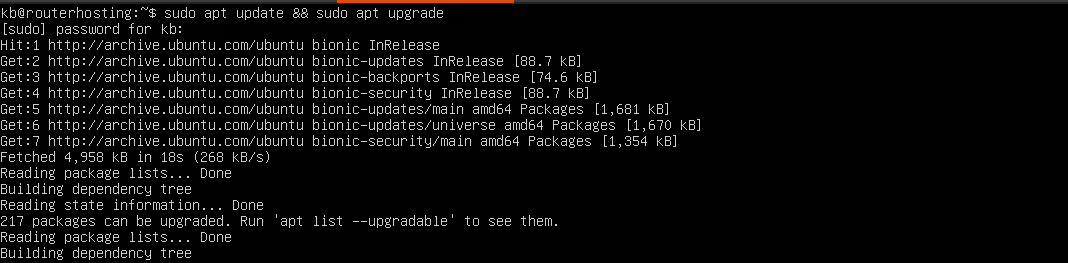
When the update is finished and you're back to the command prompt, information technology's time to get things started for real.
Linux Hosting Simplified
Want a better way to host your websites and web apps? Developing something new? Only don't like Windows? That'due south why we have Linux VPS.
Get your Linux VPS
Pace 2: Setting upwards a Display Manager
To simplify the installation of the packages we are going to demand here, we will showtime install a parcel chosen tasksel manager. This Linux utility software allows you to download and install several connected packages and requirements with a single control. That makes the installation of larger software like a GUI desktop environment much easier. Of course, you can also use the native apt to install the desktop environment of your choice, and I'll provide instructions for both.
But expect; if you feel like things are moving too fast, or find yourself thinking "what's with these commands," and so y'all may wanna check out the ten Linux commands every user should know .
I recommend you use tasksel, however, because in that location is less chance of things going wrong because of parcel dependencies. To install tasksel, type the following into the Ubuntu last:
sudo apt-become install tasksel -y When tasksel is finished installing, we tin movement on to selecting and installing a brandish manager for Ubuntu Server.
Display managers are software packages responsible for launching the graphics of a desktop environs on Ubuntu Server. In that location are multiple display servers to cull from, each with their own features and use cases, just for a first-time installation, you are better off with either SliM or LightDM. Both of them are light and fast, adding little overhead. SliM is usually considered the best display director around, with lots of documentation and tutorials bachelor. LightDM is a close second, so choosing either 1 is fine. Read Slant's comparison of the two if you desire to know more about their differences.
To install SLiM, use the following command:
sudo apt-go install slim -y If you take decided on LightDM, however, brand sure to enter the 1 below:
sudo apt-get install lightdm -y There is also a third option to consider when it comes to display managers, but only if yous're planning on installing KDE Plasma every bit the GUI of your pick. SDDM is the native brandish managing director of the KDE Plasma desktop environment and installing it will brand sure the desktop runs smoothly:
sudo apt-get install sddm -y
Since neither of these three are the native display manager for GNOME, it's possible you'll see a bulletin asking yous to ostend which display manager you'd like every bit the default: the native (merely heavy) GDM3 or LightDM (or SLiM, or SDDM). If that happens, just choose the one y'all just installed, and press <OK> using the keyboard.
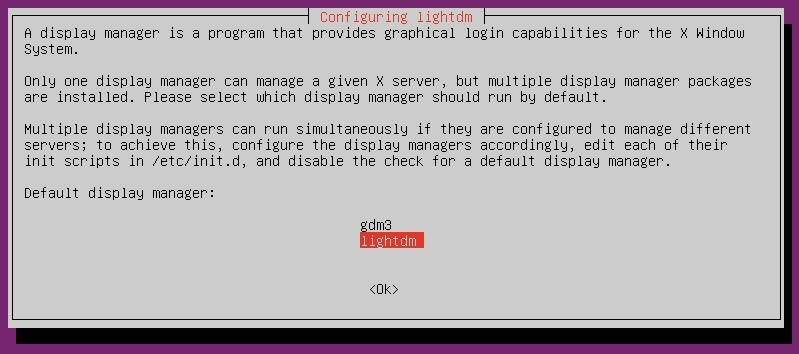
Now, information technology's onward to the next step — nosotros are about getting fix to really install GUI on Ubuntu Server only if y'all're feeling drained and exhausted thinking well-nigh all the things left to do, remember to read on the end, where I'll reveal the ultimate shortcut.
Step iii: Downloading and Installing your Favorite GUI
By now, you should know which of the bachelor GUI desktop environments you desire to install on your Ubuntu Server. If non, you can always take another peek at our comparing of acme contenders. Hither, you'll find the instructions for installing each of the desktops we discussed.
Installing GUI on Ubuntu Server
- Installing GNOME
- Installing KDE Plasma
- Installing MATE
- Installing Xfce
Installing GNOME
To install GNOME using tasksel, yous tin use either one of the following methods: using tasksel from the command line or using the tasksel UI. To install GNOME on Ubuntu Server using tasksel from the command line, enter the following command:
sudo tasksel install ubuntu-desktop If you lot adopt a more than user-friendly manner, y'all can use the minimal user interface of tasksel and select the right packet parcel. First, you lot'll have to start tasksel by running it from the terminal:
Tasksel Tasksel will and so greet yous with a sort of minimal GUI that lets you select the package bundle (drove of software, as tasksel itself calls it) you want. Every bit you can see in the screenshot below, at that place is a bundle chosen "Ubuntu desktop" nearly midway downward the listing.
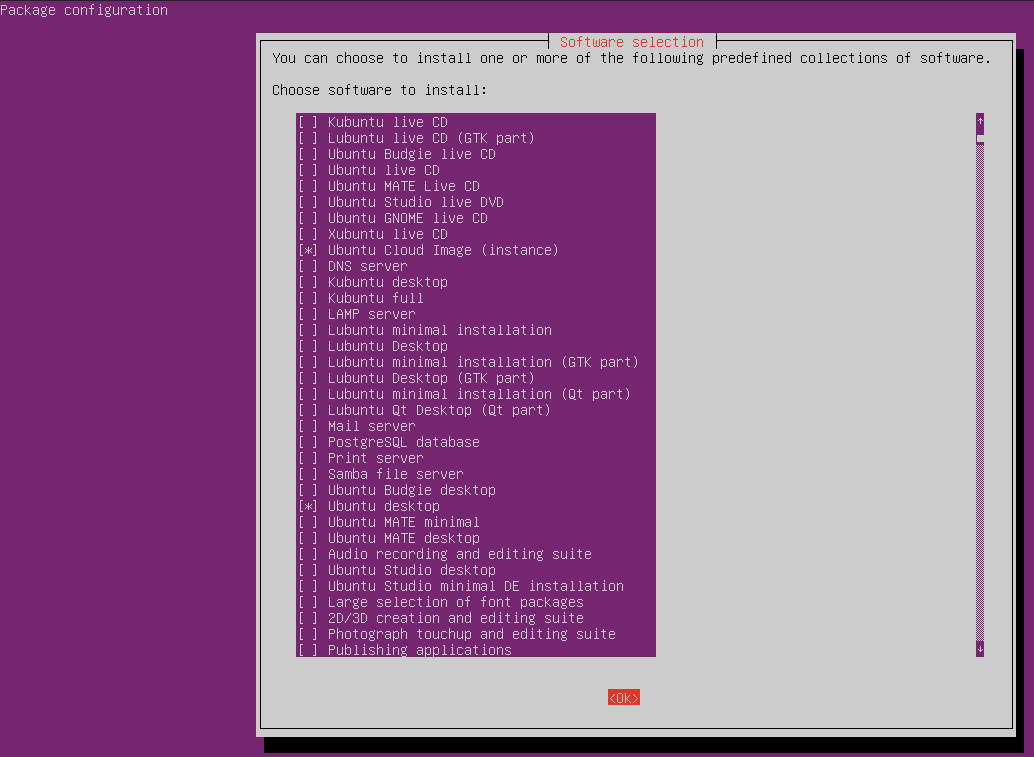
Navigate the list using the arrows keys and when you get to "Ubuntu desktop," press <Infinite> to select information technology. Once you lot've got information technology marked, apply <TAB> to move the cursor down to the button that says OK at the very lesser of the UI. Press <ENTER> to finalize your choice and start the download and installation of GNOME every bit the GUI desktop of your Ubuntu Server.
If yous'd similar to apply apt instead of tasksel, y'all can install GNOME using the following control:
sudo apt-get install ubuntu-desktop Any method y'all've followed, the installation may take some time to finish, and when information technology's done, your system will automatically reboot. Once Ubuntu Server is dorsum online, you'll run across, to your relief (at least that's how I felt!), that there is a graphic login screen waiting for you. Once y'all enter your account, you'll be faced with something that usually looks something similar this:
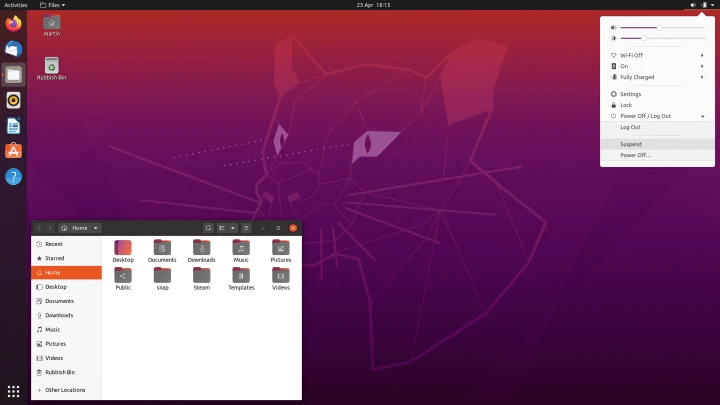
In the rare event of Ubuntu Server booting up again to a CLI, you tin can simply strength it to start the desktop using the following command:
If you have called LightDM:
sudo service lightdm start
If you have SLiM:
sudo service slim start With this, yous've managed to successfully install GUI on Ubuntu Server for the first fourth dimension. If y'all've had some trouble going through the steps and would prefer a simpler alternative, or if yous're simply curious nigh that ultimate shortcut I promised at the start, yous tin skip ahead to the decision.
Installing KDE Plasma
Since tasksel does not include a KDE Plasma bundle, we will have to use the adept old apt-go to install this highly customizable desktop. To do that, enter the following line into the terminal:
sudo apt install kde-plasma-desktop That may take a while to terminate, so sit dorsum and relax. When the installation is done, your organisation may reboot and kickoff up once more in CLI-mode. To showtime the KDE Plasma GUI, y'all have to force the display manager to launch information technology:
If you've called SDDM equally your brandish manager:
sudo service SDDM start
If you've called LightDM:
sudo service lightdm start
If y'all've chosen SLiM:
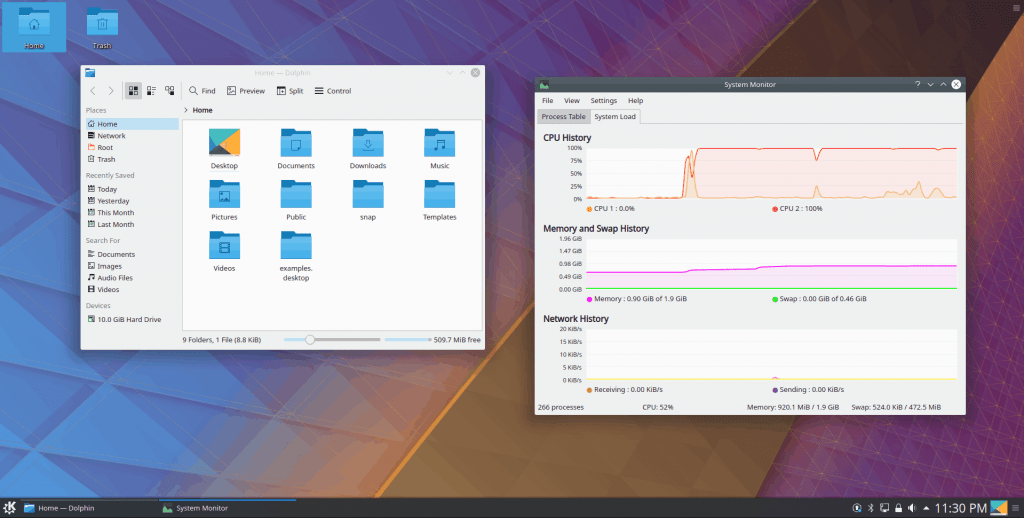
sudo service slim start That should get you a proficient-looking, lightweight GUI desktop looking something like this:
Found all that too complicated or ran into cabalistic errors? Well, make sure to stick around for the shortcut I will reveal in the conclusion.
Installing MATE
If y'all've settled on MATE, you have made a well-counterbalanced pick. To install MATE, you can use both tasksel and apt-become. Yous can run the following command to install the GUI desktop using tasksel:
sudo tasksel install ubuntu-mate-core If you'd rather use the native apt-become installer to fix MATE, you can employ the command below:
sudo apt-get install ubuntu-mate-cadre -y The installation will kickoff either way and information technology will accept a while before it's finished. One time the system reboots and Ubuntu Server boots support, y'all'll be able to use a GUI login screen to enter a GUI desktop. Enjoy the unique colour palette of MATE.
Installing Xfce
The concluding desktop environment we cover will be the well-known lightweight champion, Xfce. Xfce itself can only be installed from the command-line using:
sudo apt-go install xfce4 slim -y But if y'all want to employ tasksel, or if you'd rather sacrifice simply a bit of boosted resources for a more dynamic await, you tin can effort installing Xubuntu, an Xfce-based desktop environment:
sudo tasksel install xubuntu-core
Of grade, Xubuntu can also be installed using apt-get:
sudo apt-get install xubuntu-core -y
Footstep 4: Forcing your GUI Desktop to Start and Stop
As I mentioned in some of the instructions, there is a gamble the GUI does not automatically beginning up later on installation and reboot. There is a way to force your display director to start your desktop environment in such cases. To start the GUI, enter the following control into the terminal:
sudo service DISPLAY_MANAGER* get-go
*where DISPLAY_MANAGER is the name of the display manager you installed at the beginning (lightdm, slim, or sddm).
In instance you e'er demand to exit the GUI and turn your server back to CLI way, open the terminal and enter the post-obit control.
sudo service DISPLAY_MANAGER* stop
*where DISPLAY_MANAGER is the proper name of the display director you installed at the get-go (lightdm, slim, or sddm).
What Now?
Past at present y'all ought to have picked your favorite GUI desktop environment and installed information technology on your Ubuntu Server. Whatever desktop y'all have installed, in that location are a lot of things still left to exercise before you have a properly configured server. So, at the very least, make sure to read our blog's tutorial on how to make your Linux server more secure .
Linux Hosting Simplified
Want a meliorate style to host your websites and web apps? Developing something new? Simply don't like Windows? That's why we have Linux VPS.
Become your Linux VPS
Had issues with the setup, or just exhausted from trying to install GUI on Ubuntu Server? That'southward only too relatable. I know that sometimes problems pop upwardly where you least expect them and finding the right way to deal with those problems is not e'er obvious. That is exactly why I promised to show you all a shortcut that lets you bypass all these abrasive problems and complexities. If you demand an Ubuntu Server with a GUI desktop, why not simply use the Cloudzy Ubuntu VPS solutions? Yous tin install any version of Ubuntu Server together with whatever desktop environment you like. With 15+ global server locations running Ubuntu VPS on peak-tier infrastructure, your Ubuntu Server will exist always online and always available. Plus, you won't accept to limit yourself to resource-efficient GUI desktops anymore — install any yous want with easy scaleup options. Did I mention the competitive prices withal?
 24
24
 0
0

Source: https://cloudzy.com/knowledge-base/how-to-install-gui-on-ubuntu-server/
Posted by: kirkmisheire.blogspot.com
0 Response to "How To Install Gui On Linux Server"
Post a Comment